A peltier powered dryblock from Isotech that stopped working. There was no current flowing to the TECs (peltier elements). That can be caused by a dead controller, dead PSU or dead TECs. They should have a very low resistance so that is easy to test first. I measured a few megohm. The once used here should measure an AC resistance around 2,2 ohm.
I made pictures from the tear down for those who are curious about the construction of these instruments.
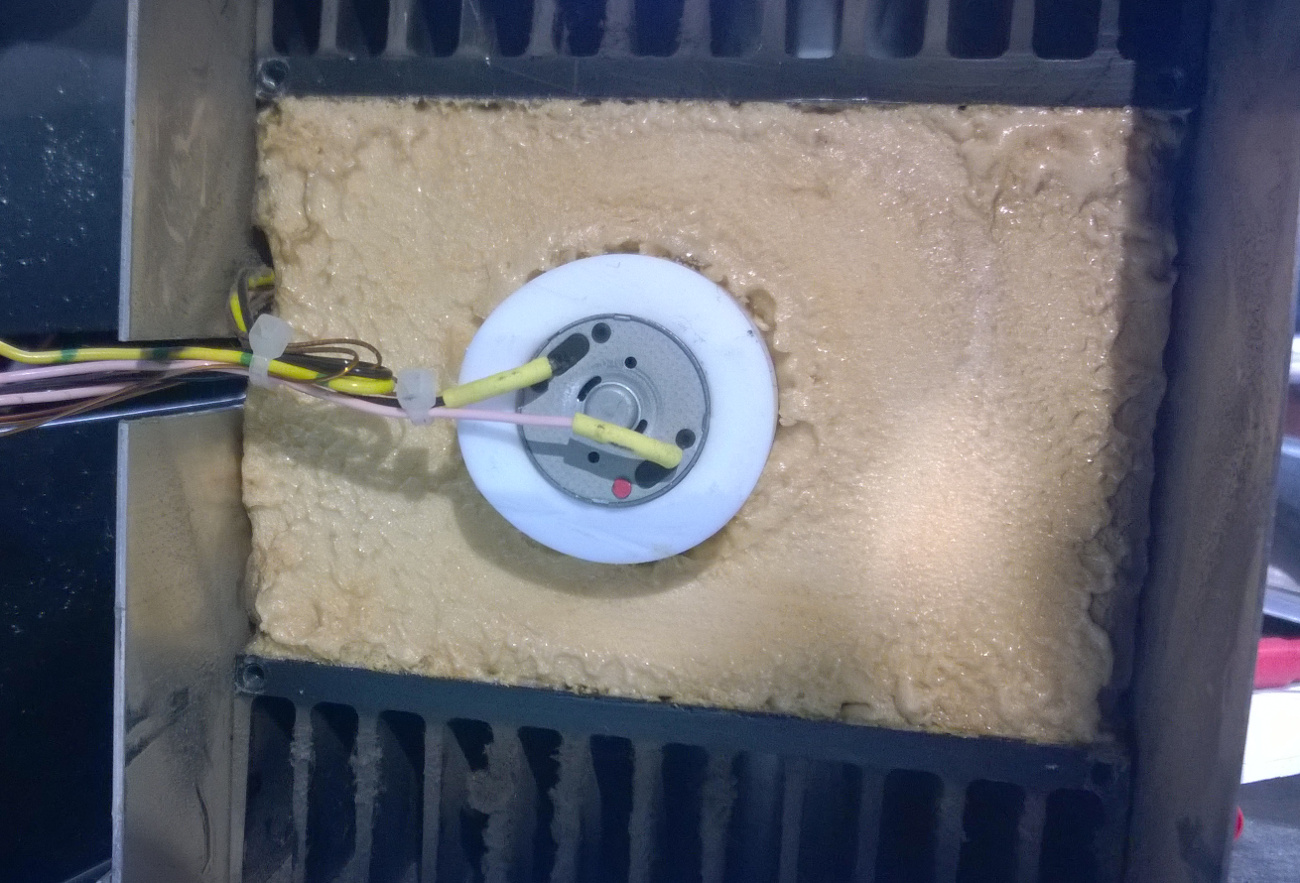
The first step was easy, removing the cabinet. This one has a motor with a rotor that holds a magnet. It is the thing in the Telflon ring on the picture above. It should be glued but had come loose.
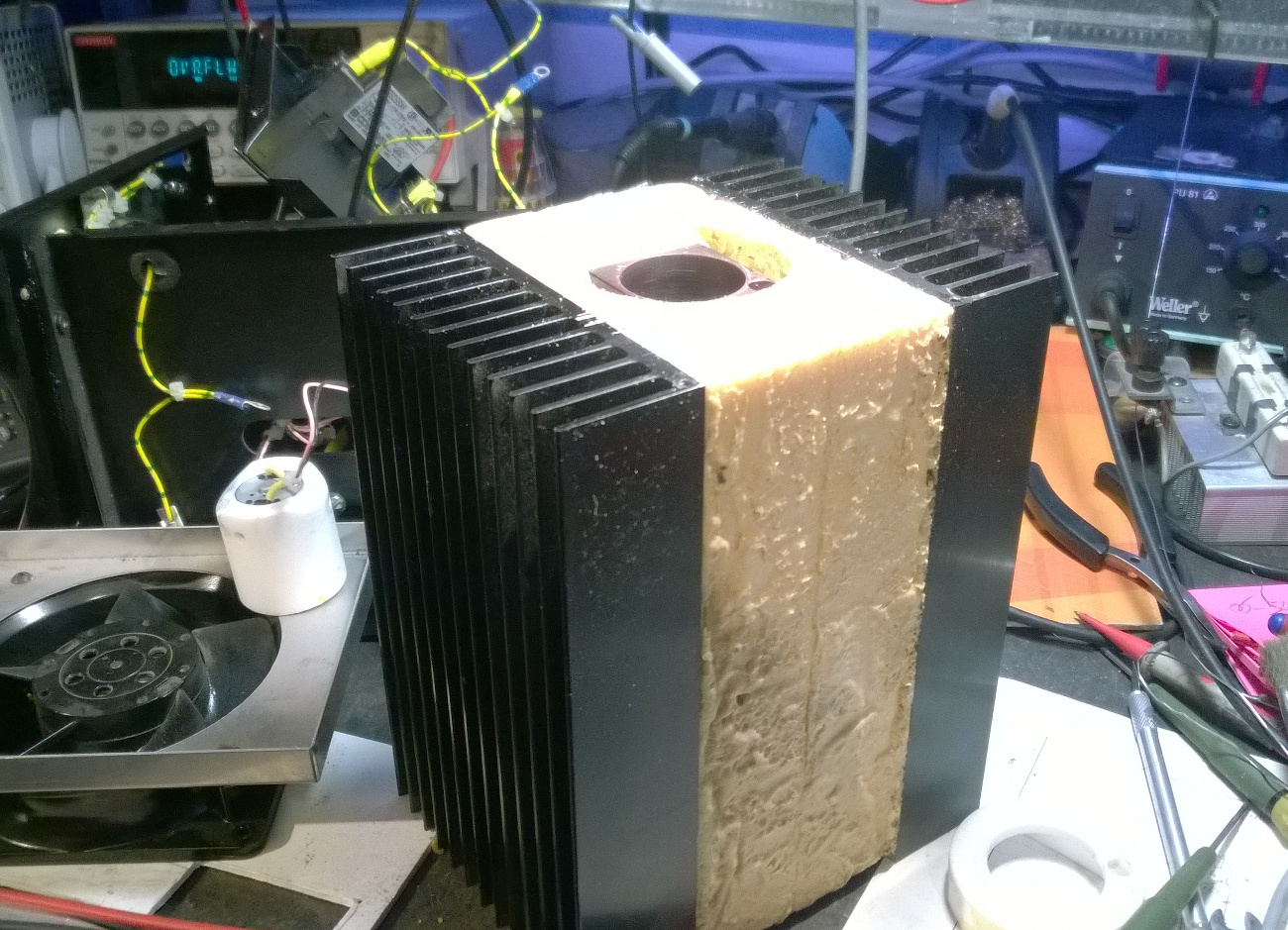
After removing the motor and the rest of the cabinet we see the dryblock in its full glory. Check the 4 screws on top of the cabinet, the whole block is only mounted by those tiny things
Cutting away the foam is a dirty job but not difficult. Just be careful not to cut the wires.
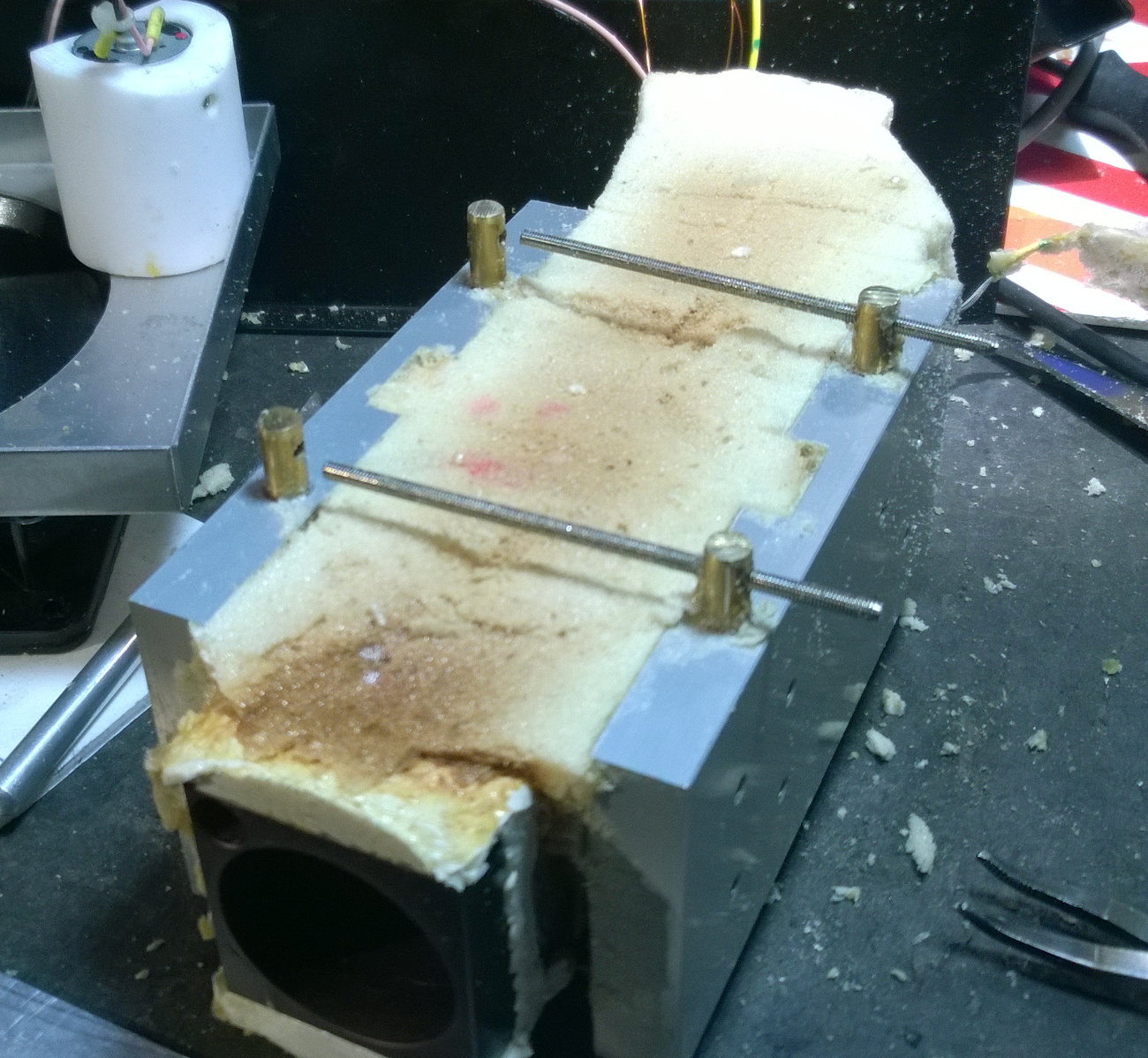
Here most of the foam is removed. The pressure-plates are pressed together during mounting and then “locked” by the M3 threaded rods screwed in the brass studs. They are not used to set or change the pressure, only to keep the pressure constant.
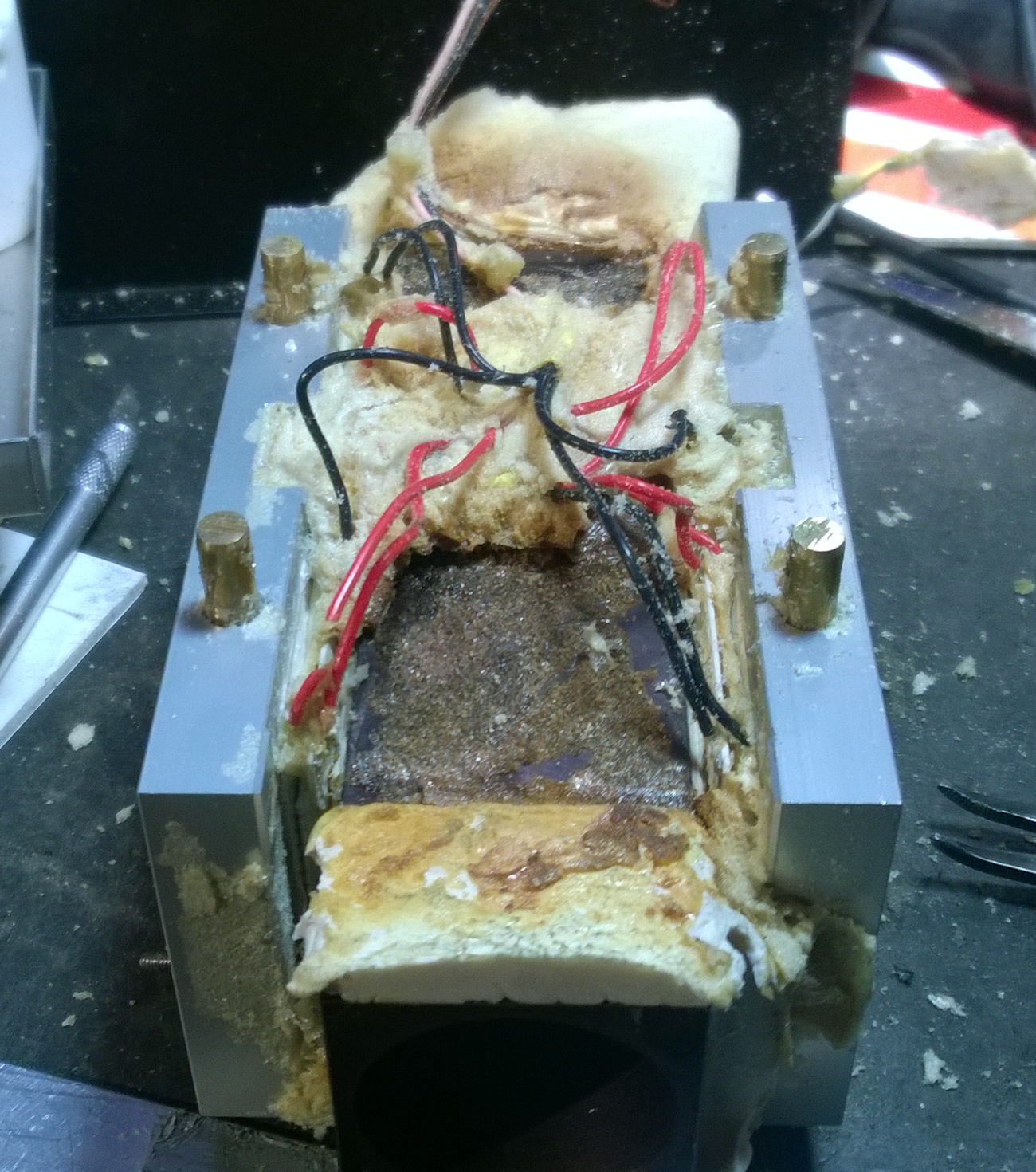
The foam was burned where it touched the anodized dryblock core.
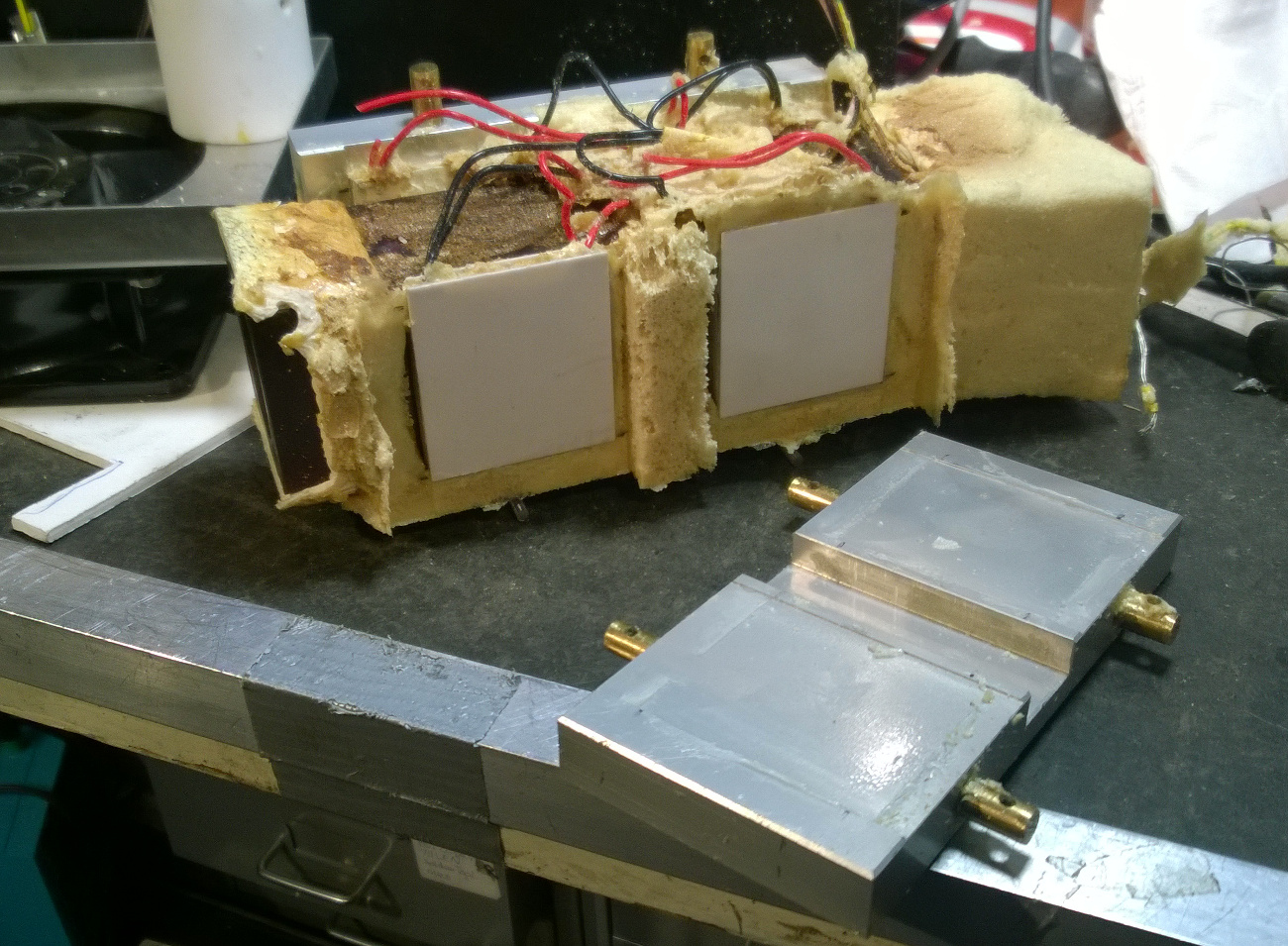
After removing the threaded rod the plates come loose and the TECs are visible. The core looks like it is milled with a flycutter, the alu plates too. The TEC’s are lapped and sealed versions. The sealing is nothing more as captan tape and kit.
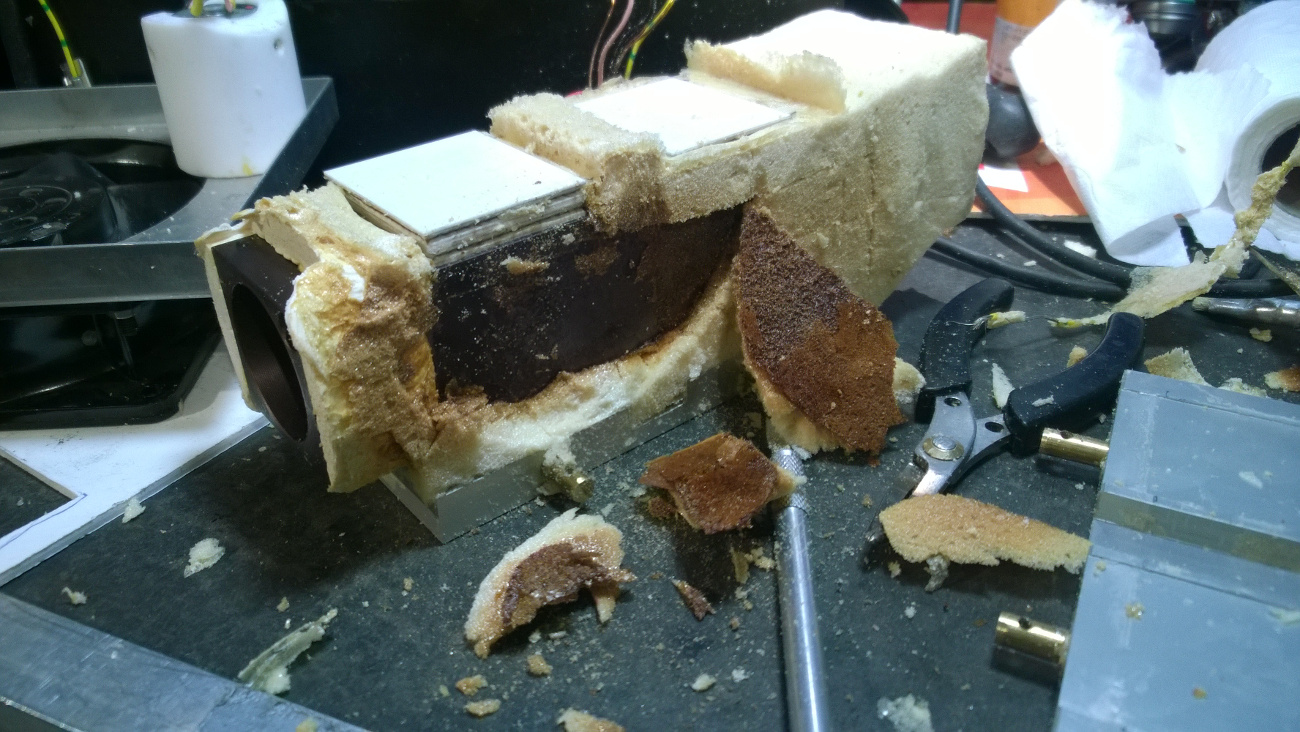
Breaking away the last foam. The TECs are stacked in pairs of 2. There are 2 strings of 4 TECs. one string is made so there are 3 in series. “One” of the 3 is made of 2 parallel. A construction that is often used in dryblocks. All TECs are the same. Marlow DT-12-6 in the sealed and lapped version.
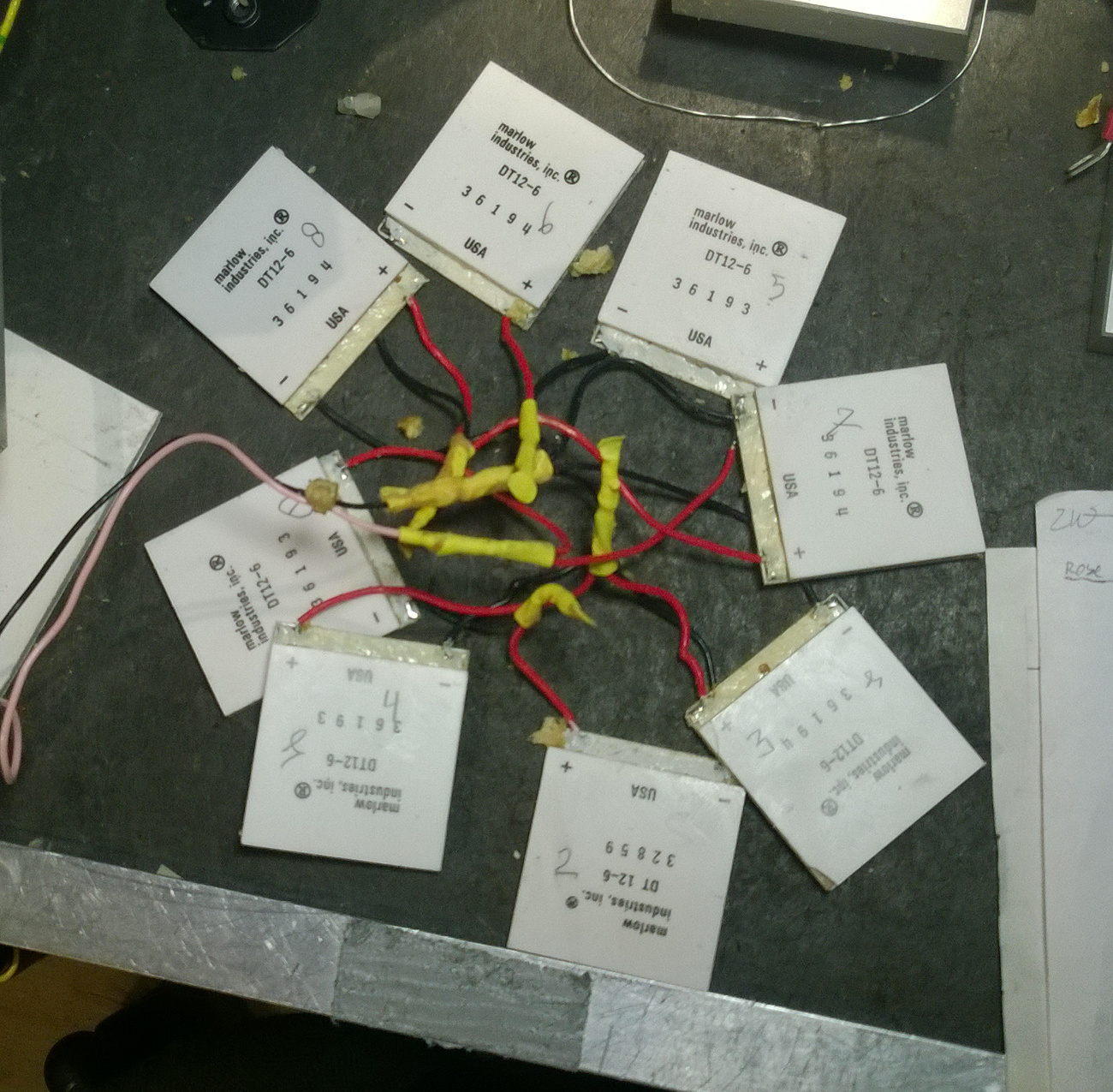
As said, 3 are toast. Nothing to loose and curious is a good combination so time for some experiments on the dead ones.
A TEC is made from a lot of small blocks semiconductor n and p material. They are all mounted in series (electrically, thermally they are parallel). This is done by soldering them on small metal strips. This is all mounted between two ceramic plates. When a voltage is applied to the free ends of the semiconductors there is a flow of DC current across the junction of the semiconductors causing a temperature difference. The side with the cooling plate absorbs heat which is then moved to the other side of the device where the heat sink is.
So what was wrong with them ? I have seen and measured a few other dryblocks that where here for repair. Datasheets from the TEC state often the AC resistance. If a dryblock does not meet his specs anymore and the controller etc is OK, there is a good chance the resistance from the TEC is increased. I think they first come a bit loose, increasing the contact resistance and finally end open. You can measure the resistance per row and find the one that is wrong. In this case the problems where all on the outer rows nearby a corner. As an experiment I managed to resolder them, that turned out to be not so difficult and the result is a resistance within the datasheet specs. I will only use the repaired ones for some experiments and tests to see how they hold.